
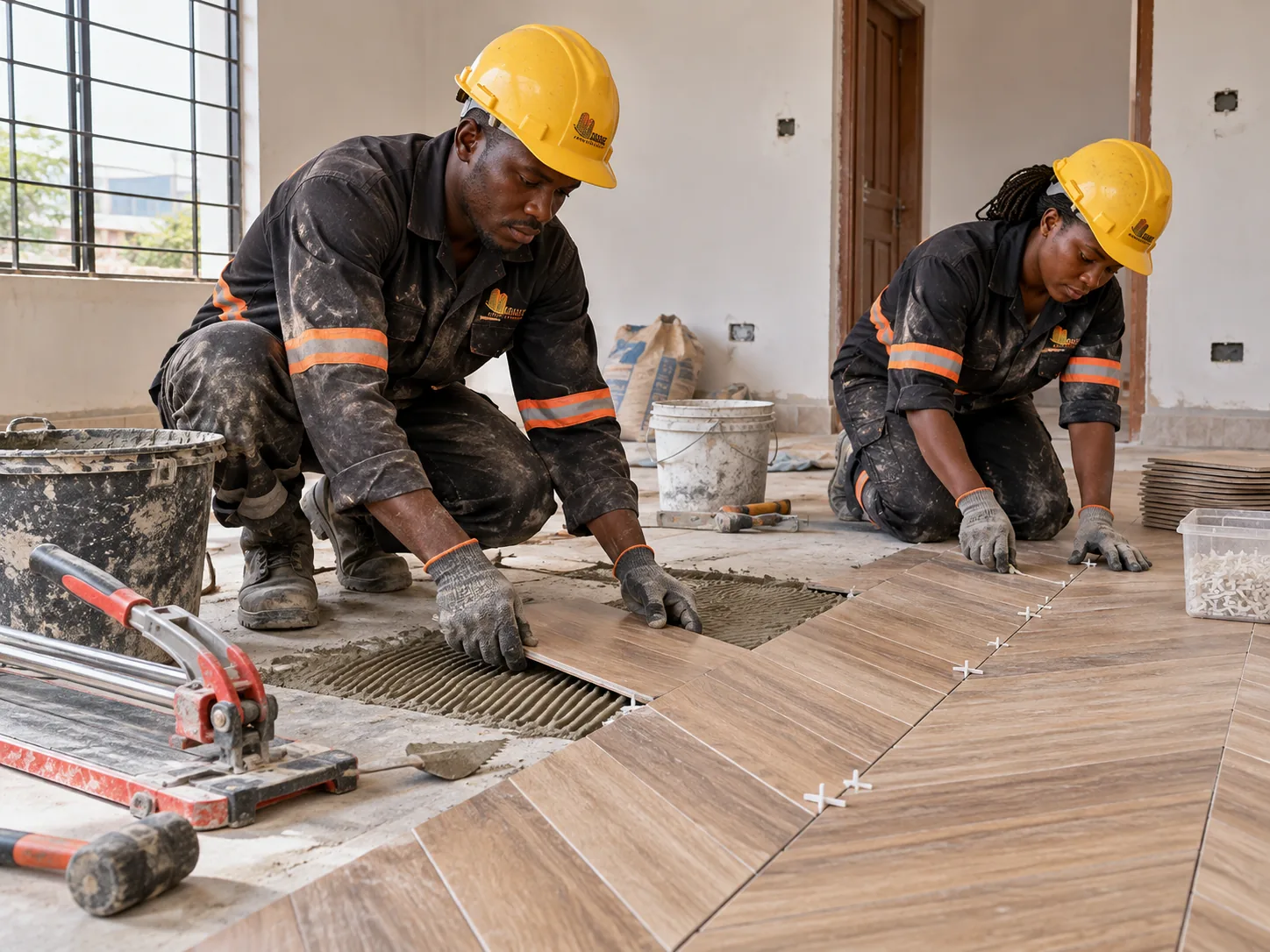
Choosing terrazzo or floor tiles starts with how you want the room to look and work, not simply which sample catches your eye. Compare the proposed finish, the condition of the existing floor, the full installation scope and the care each option will need. Neither should be treated as the automatic choice for every room.
This guide helps you prepare a fair comparison before committing. It does not assume a particular terrazzo specification, tile type, installation price or completion time: those details need to be confirmed for your project.
Start With a Clear Construction Brief

Describe the room before choosing its finish. A family living room, entrance, kitchen and bathroom can have different priorities. Note whether the space is frequently wet, receives heavy foot traffic or must remain accessible during the work.
Then describe the appearance you want. Bring reference pictures, but separate the overall effect from the exact material shown. You may like a colour, pattern or level of shine without wanting every feature of that floor.
Set your priorities before comparing samples
Write down your three most important requirements. These might be a particular appearance, straightforward cleaning or a workable renovation programme. This gives the installer a clear brief and helps you judge both proposals against the same needs.
- Identify every room included in the work.
- Record areas exposed to water or tracked-in dirt.
- Note changes in floor level and adjoining finishes.
- Explain any limits on room access during installation.
Check the Site Before Building
A surface sample cannot show whether your existing floor is ready for the proposed finish. Arrange for the underlying base to be assessed before accepting a final scope. Record visible cracks, uneven areas, damp patches and any finish that may need removal.
Ask the installer to explain what further checks are needed and who will address any defects. Do not assume that covering an existing problem will resolve it.
Door clearances, thresholds, steps and drainage points also deserve attention. Ask how the proposed finished floor level will meet these features. In a wet area, have the relevant professional confirm how the flooring proposal fits the drainage and waterproofing requirements.
Prepare a Realistic Budget
Compare complete proposals rather than a material figure from one supplier and an installed figure from another. A lower initial number may simply exclude work that the other quotation includes.
Give both installers the same room measurements and brief. Ask each to separate preparation, materials, installation, finishing and any removal work. Where the existing floor has not been inspected, request a clear statement of what remains provisional.
Useful budget questions include:
- Does the quotation include removing and disposing of the existing finish?
- What preparation has been allowed for?
- Are edges, thresholds and skirtings included where required?
- Who supplies the materials and arranges delivery?
- How will additional work be agreed and priced?
There is no supported project price here for either option. Use written, site-specific quotations to decide which proposal fits your budget.
Choose the Right Builder
For this decision, relevant flooring experience matters more than a broad promise to handle construction. Ask prospective installers to show examples of the particular finish they propose and explain their role in that work.
Discuss who will prepare the base, install the finish and check the completed floor. If different teams are involved, establish who coordinates them. Unclear responsibility can leave gaps between preparation and finishing.
You can review the site’s Terrazzo Construction Service and Tile Installation pages as starting points for an enquiry. Confirm the scope available for your project rather than assuming every related task is included.
Materials and Workmanship: Comparing Terrazzo or Floor Tiles
The names “terrazzo” and “floor tiles” are not detailed enough to define a finished floor. Ask what exact product or system is being proposed, how it will be finished and whether it is suitable for the intended room.
Compare appearance at a useful scale
View physical samples where possible, preferably in the room’s lighting. A small sample helps with colour and texture, but ask what it cannot represent about the completed floor. Discuss pattern, joints, edges and transitions rather than judging colour alone.
For tiles, ask to see the proposed size and layout, including likely cuts around doorways and room edges. For terrazzo, ask how the proposed mix and finish will be represented by an approved sample, and what variation you should expect.
| Decision point | Terrazzo proposal | Floor tile proposal |
|---|---|---|
| Appearance | Confirm the mix, colour and surface finish. | Confirm the tile, size, layout and grout colour. |
| Underlying base | Request preparation requirements for the proposed system. | Request preparation requirements for the selected tiles. |
| Room suitability | Ask for suitability information for the intended use. | Check suitability information for the exact tile. |
| Edges and joints | Agree the proposed joint and edge details. | Agree grout joints, cuts and transition details. |
| Return to use | Request written access and protection instructions. | Request written access and protection instructions. |
| Future repairs | Ask about repair methods and matching limitations. | Ask about replacement methods and spare tiles. |
This checklist does not rank one finish above the other. It identifies the information needed for a fair choice.
Plan the Construction Stages
Ask for a sequence covering inspection, preparation, installation, finishing, protection and handover. The exact stages will depend on the selected materials and site conditions; do not assume both options follow the same programme.
Distinguish between installation finishing and the room being ready for normal use. Request specific guidance on walking on the floor, moving furniture back and cleaning it for the first time.
For an occupied home, agree how people will reach other rooms and where materials will be stored. Also establish who protects the new floor if painting, carpentry or other work continues afterwards.
Keep Communication Simple
Put the selected finish and approved details in writing. Include sample references, room boundaries, edge treatments and any work excluded from the quotation. Photographs can support this record, but should not replace clear product or specification details.
Use one agreed contact for decisions. If a change becomes necessary, record its effect on cost, appearance and timing before work proceeds. This is especially useful when a preferred material becomes unavailable or preparation reveals an unexpected problem.
Think About Long-Term Value
A floor’s value includes the effort involved in looking after it. Request cleaning and maintenance guidance for the actual proposed finish, including any restrictions on products or equipment. Avoid assuming that advice for one terrazzo system or tile applies to every other one.
Discuss repairs before they are needed
Ask how isolated damage would be assessed and repaired. For terrazzo, discuss whether a repair could remain visible and what information should be retained about the original finish. For tiles, ask whether keeping spare pieces is advisable and how future matching would be handled.
Neither a spare tile nor a recorded mix guarantees an invisible repair. The useful comparison is the repair approach, its limitations and the records you can keep now.
Why Local Construction Knowledge Helps
Local knowledge is useful when it leads to specific checks: current material availability, delivery arrangements and access to people familiar with the proposed finish. It should not replace a clear specification or site assessment.
Confirm availability before approving a sample. Ask whether all required materials can be obtained for your job and how a substitution would be handled. Do not accept a replacement solely because its colour appears similar; suitability and installation requirements also need review.
A Practical Way Forward
Reduce the decision to two documented proposals for the same space. Keep the room brief, quotations, samples and maintenance guidance together so you can compare them without relying on memory.
- Confirm the room’s use and your main priorities.
- Have the existing floor assessed.
- Review the exact finish proposed for each option.
- Compare complete scopes and exclusions.
- Check access restrictions, cleaning guidance and repair options.
- Record your selection before ordering or starting work.
If appearance remains the deciding factor, revisit the samples after checking these practical points. A preferred look is a sound reason to choose a finish, provided the proposal also meets the room’s requirements.
Frequently Asked Questions
Is terrazzo or tile flooring cheaper?
That cannot be established from the finish name alone. Compare site-specific quotations with equivalent preparation, installation and finishing scopes. Check exclusions before treating either proposal as the cheaper complete option.
How should I compare samples?
View them under similar lighting and discuss the completed floor, not just the sample. Ask about expected variation, joints, edges and layout. Record the approved reference so the installation team knows what you selected.
Which option is easier to maintain?
Compare the documented care requirements for the exact materials offered. Consider your cleaning routine and ask about periodic treatment or specialist attention, if applicable. A general claim about easy maintenance is not a substitute for those instructions.
Can either finish be installed over my existing floor?
Do not assume so without an assessment. Ask whether the existing finish and underlying base are suitable, what preparation is required and how the new floor level would affect doors and adjoining spaces.
What should I ask about future damage?
Request an explanation of likely repair methods, matching limitations and useful records or spare materials to retain. Confirm whether future repair work would require a separate assessment and quotation.
Build With a Clear Plan
Share your room details, photographs of the existing floor and preferred appearance when enquiring about terrazzo or tile installation. Ask for guidance on the next assessment and the information needed for a comparable proposal. Decide once the finish, preparation and care requirements are clear—not from a sample or headline price alone.
TopicFloor finishes: terrazzo and tile comparisons
Reader focusInformational comparison for homeowners deciding between terrazzo and floor tiles, rather than seeking installation instructions or tile prices.
Main subjectterrazzo or floor tiles